1927-29 Leavenworth Booker T’s
1927-29 Leavenworth Booker T’s
Hall of Fame Class of 2025
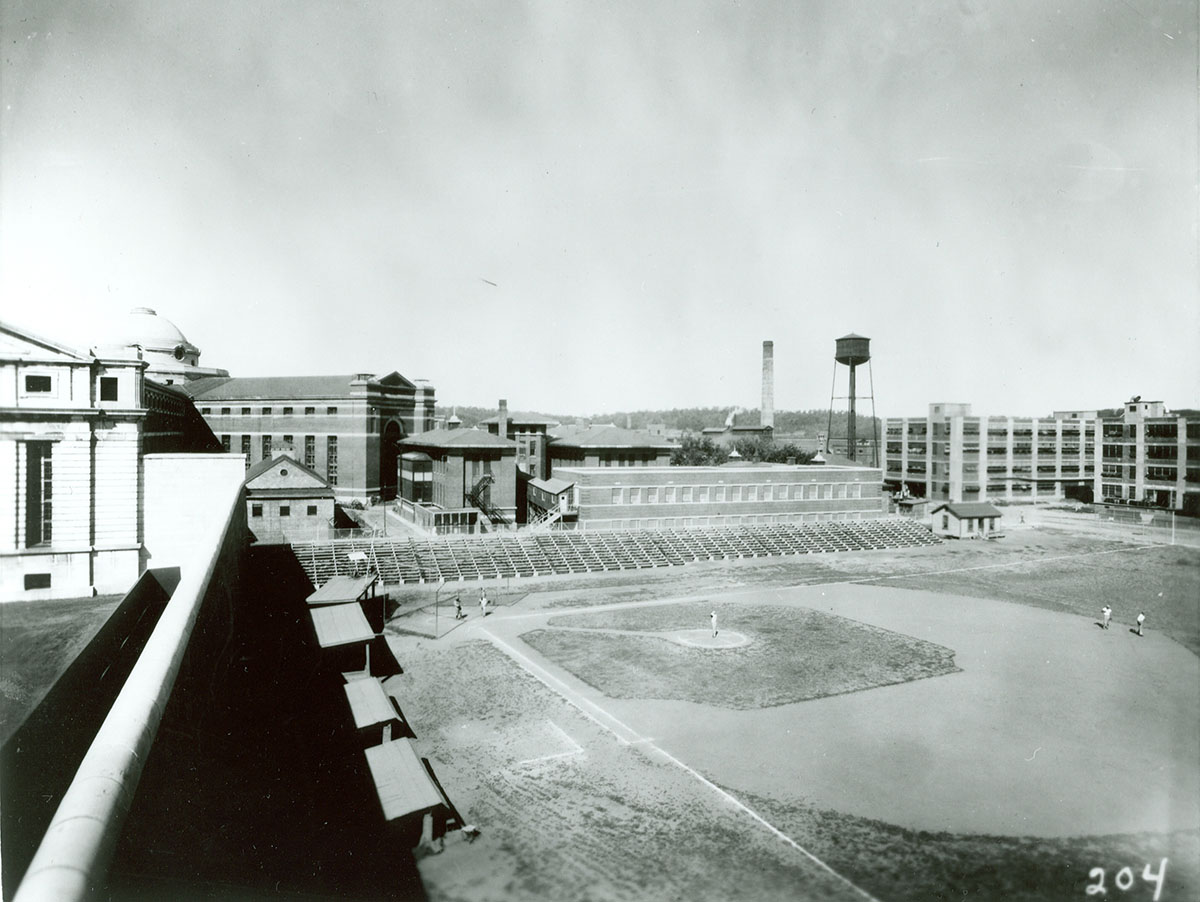
In the late 19th century, prisons turned to baseball as a way to encourage good behavior in prisoners. At the federal penitentiary in Leavenworth, a regulation diamond with seating for 1500 was built in 1912. A league was formed along the prison’s racial makeup. White players formed the Brown Sox. Native American prisoners organized the Red Men. African American inmates founded the Booker T. Washingtons.
Leavenworth was a Jim Crow prison in a Jim Crow country. Black and white prisoners lived in segregated cell houses, ate at segregated tables, bathed in segregated showers and cheered from segregated bleachers.
The Booker T’s dominated from their beginning, easily capturing the warden’s pennant in 1912 and 1913. In an effort to provide more competition, Indian and Mexican players were added to the white team and other teams were formed.
In 1914, the Booker T’s began to play other teams from outside the prison – semiprofessional, military, and town teams. Prison players endured bean balls, quarrels with corrupt umpires, teammates who betrayed signals to opposing teams and teams that failed to appear for games. The Kansas City Tramways once abandoned the field mid-game rather than lose to a convict club.
Between 1914 and 1932, the Booker T’s were 151-52. They won independent state semipro titles in 1927 and 1929. The team was rarely without the service of at least one former or future Negro League player.
Incredibly, four Booker T’s with no previous professional baseball experience went from the Leavenworth penitentiary to the Negro National League – David Wingfield, a former Buffalo soldier who had murdered a fellow soldier in a fight over a woman; Roy Tyler, a soldier convicted of mutiny and murder in the 1917 Houston Riot; Albert Street, incarcerated on a narcotics charge; and Joe Fleet, who served time in Leavenworth for larceny.
Adapted from The Booker T Four’s Unlikely Journey from Prison Baseball to the Negro Leagues by Timothy Rives and Robert Rives, National Archives Prologue Magazine, 2004.